Watercolor English Bull Terriers Clip Art Review
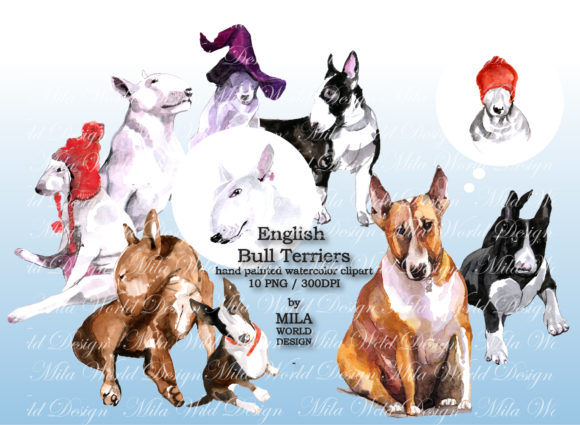
As a designer who has spent years translating digital art into tangible thread, I approach every new asset with a critical eye. When I first opened the file for Watercolor English Bull Terriers Clip Art, I wasn't just looking at a cute image; I was analyzing how this specific aesthetic would translate from a screen to fabric. The mood here is immediately distinct. Unlike the sharp, vector-heavy graphics that dominate many embroidery libraries, this design leans heavily into softness and artistic texture. It captures the gentle, slightly whimsical spirit of the breed while maintaining enough structural integrity to be stitched effectively.
First Impressions: Soft Edges and Stitch Potential
The visual personality of Watercolor English Bull Terriers Clip Art is defined by its gradient-like transitions and organic shapes. In the realm of machine embroidery design, watercolor styles present a unique challenge. They rely on blending colors to create depth, which usually requires careful manipulation of fill stitch density and color sequencing. My initial assessment suggests that this design works best when you are aiming for a high-end, boutique feel rather than a standard promotional item. The layout feels balanced, making it suitable for a variety of placements, but the delicate nature of the "paint" effects means that the choice of thread colors will be the deciding factor in the final look.
I found myself imagining this on a heavy-weight canvas tote bag or a structured apron. The contrast between the soft, flowing lines of the bull terrier and the sturdy texture of the fabric creates an appealing juxtaposition. For those running a craft business or managing an Etsy seller account, this type of Illustrations category asset can elevate your product line. It moves away from the generic and signals to the customer that they are purchasing a piece of art, not just a logo.
Real-World Application: From Tote Bags to Nursery Decor
To truly evaluate Watercolor English Bull Terriers Clip Art, I need to visualize it in a real-life scenario. Imagine preparing a custom embroidered sweatshirt for a client who loves their dog. The challenge with sweatshirts is the fleece texture, which can sometimes swallow fine details. However, the bold yet soft silhouette of this bull terrier holds up well against the nap of the fabric. If you use a medium-weight stabilizer, the design should pop without puckering. This makes it an excellent candidate for sweatshirt embroidery where comfort and aesthetics must coexist.
Another strong use case is baby embroidery. The watercolor style naturally fits the soft, pastel palettes often used in nursery decor. Picture this design on a pillow cover or a blanket corner. The lack of harsh black outlines gives it a dreamy quality that parents love. It transforms a simple handmade product into a cherished keepsake. Similarly, for holiday gifts, this design could be adapted into a festive embroidered patch or applied directly to a kitchen towel. The versatility allows you to pivot quickly between different seasons and trends without losing the core appeal of the artwork.
Strategic Placement and Fabric Considerations
While the design is versatile, there are specific situations where you must exercise caution. The subtle gradients inherent in the watercolor style may get lost on highly textured fabrics like thick wool or loosely woven linen. On these materials, the stitch density might need adjustment to ensure the image remains legible. Additionally, if you are working with dark fabric, the lighter tones of the watercolor effect require a significant amount of underlay and potentially a change in thread colors to maintain visibility. Without proper contrast, the "wet paint" look can appear muddy rather than vibrant.
Curved surfaces, such as caps, also demand attention. The organic shape of the bull terrier's head is complex, and stitching it onto a curved bill can cause distortion if the hoop size isn't managed correctly. I recommend testing the design on a scrap piece of similar material before committing to a finished cap. This ensures that the curves of the dog's face do not stretch unnaturally during the stitching process. Furthermore, avoid using this design on thin, stretchy fabrics like jersey unless you have a very robust stabilizing strategy, as the tension from the fill stitch could warp the garment.
Maximizing Visual Appeal and Product Value
The true value of Watercolor English Bull Terriers Clip Art lies in its ability to enhance the perceived quality of your work. In a crowded market, customers are drawn to designs that look professional and thoughtful. This design achieves that by mimicking the look of hand-painted art, which commands a higher price point than standard clip art. When you sell a personalized gift featuring this design, you are selling a story and an emotion, not just a stitched image. This builds customer trust and encourages repeat business.
For small shop owners looking to expand their inventory, this asset serves as a powerful tool for brand consistency. You can create a cohesive collection of items—totes, shirts, patches—all featuring the same artistic style. This helps in building a recognizable brand identity. Moreover, the design works exceptionally well in printable mockup scenarios. Before you even cut a single thread, you can generate realistic previews to showcase on your website or social media, driving engagement and sales before production begins.
Practical Designer Notes for Success
If you decide to integrate Watercolor English Bull Terriers Clip Art into your workflow, follow these practical steps to ensure a flawless result:
- Test on Scrap Fabric First: Always run a test stitch on a piece of fabric similar to your final project. Check how the watercolor gradients render with your specific machine settings.
- Review Stitch Density: Watercolor effects often rely on varying densities. Ensure your embroidery file settings allow for smooth transitions without leaving gaps or causing excessive bulk.
- Confirm Hoop Size: Verify that the design fits comfortably within your hoop without crowding the edges, which can lead to registration issues.
- Inspect Small Details: Zoom in on the eyes and ears of the bull terrier. These areas often contain the most detail and may require manual editing if they appear too dense or too sparse.
- Use Proper Stabilizer: Do not skimp on stabilization. A good tear-away or cut-away stabilizer is crucial for maintaining the integrity of the soft edges.
- Check Licensing: Before selling any finished product or digital files, confirm the licensing terms. Ensure you are permitted to use this design for commercial embroidery projects.
- Compare Backgrounds: Test the design on both light and dark backgrounds to see how the thread colors perform in different contexts.
In conclusion, Watercolor English Bull Terriers Clip Art is a sophisticated addition to any designer's toolkit. It bridges the gap between digital illustration and tactile craftsmanship, offering a fresh alternative to traditional embroidery styles. Whether you are creating a one-off custom apparel piece or scaling up for a craft fair, this design has the potential to make your products stand out. By respecting its nuances and applying sound technical practices, you can turn this digital asset into a stunning, high-value reality.